Too Much: Understanding Graphic Noise
Thesis Study
OCAD University's 110 annual GradEx
2024/2025
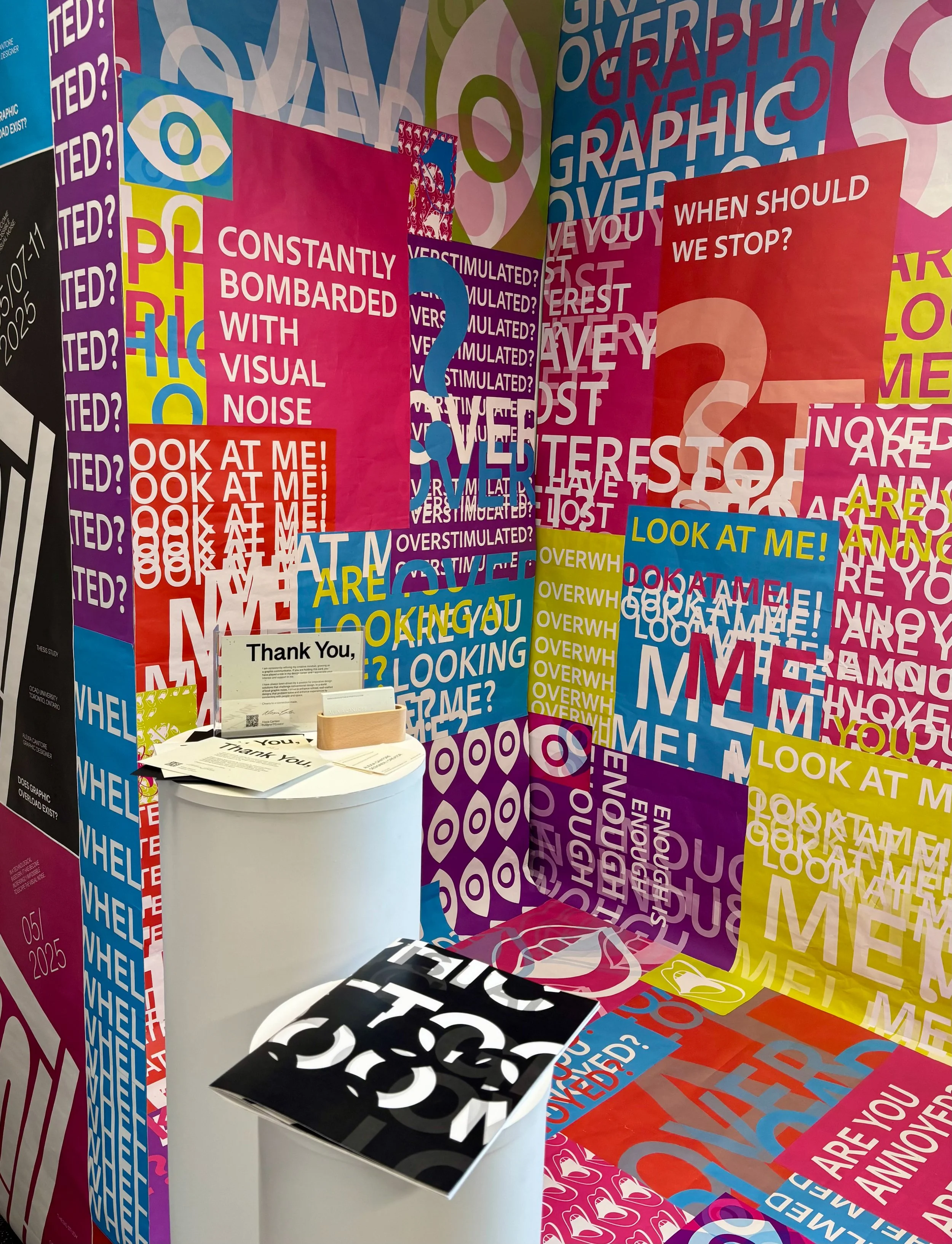
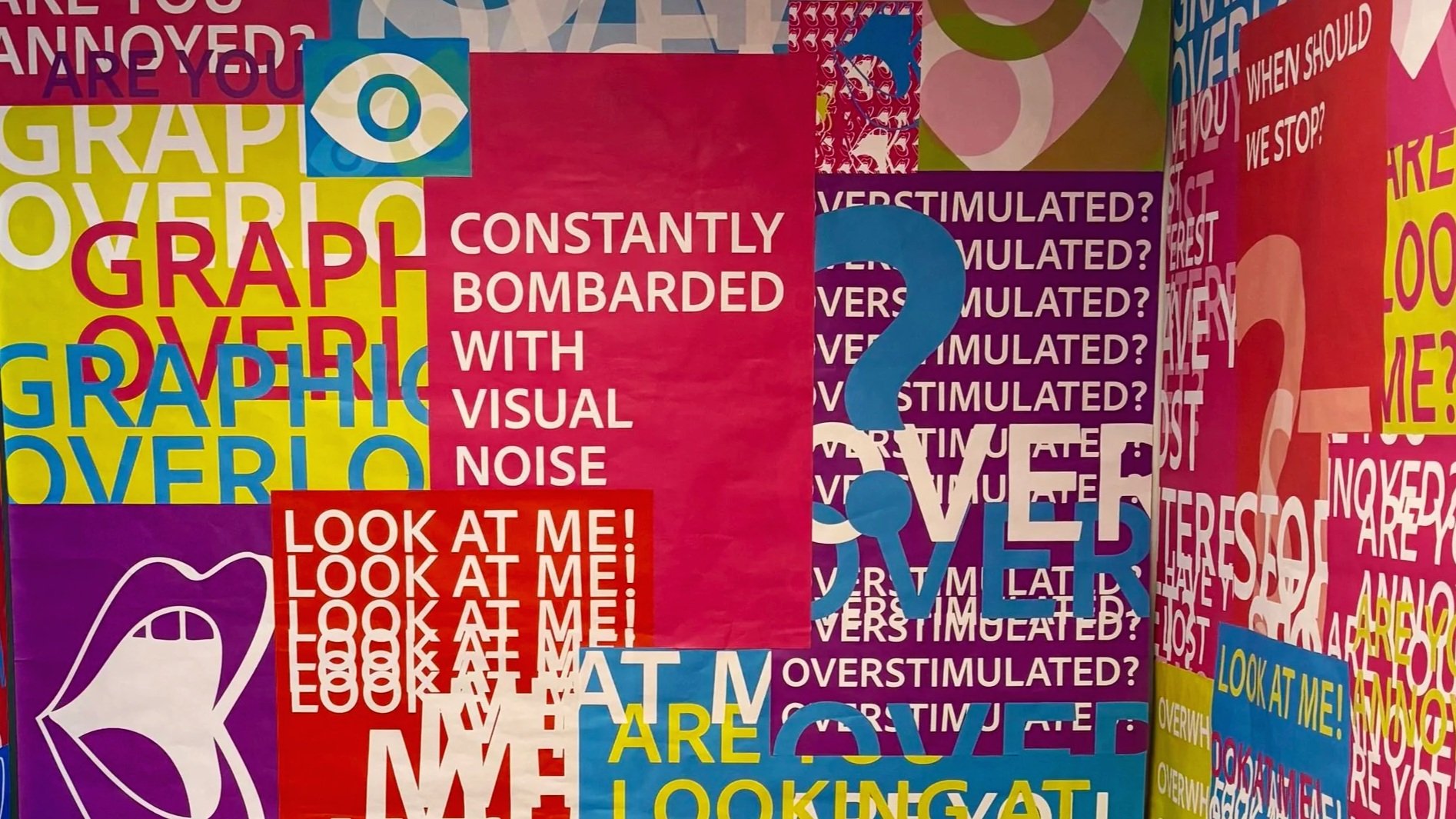
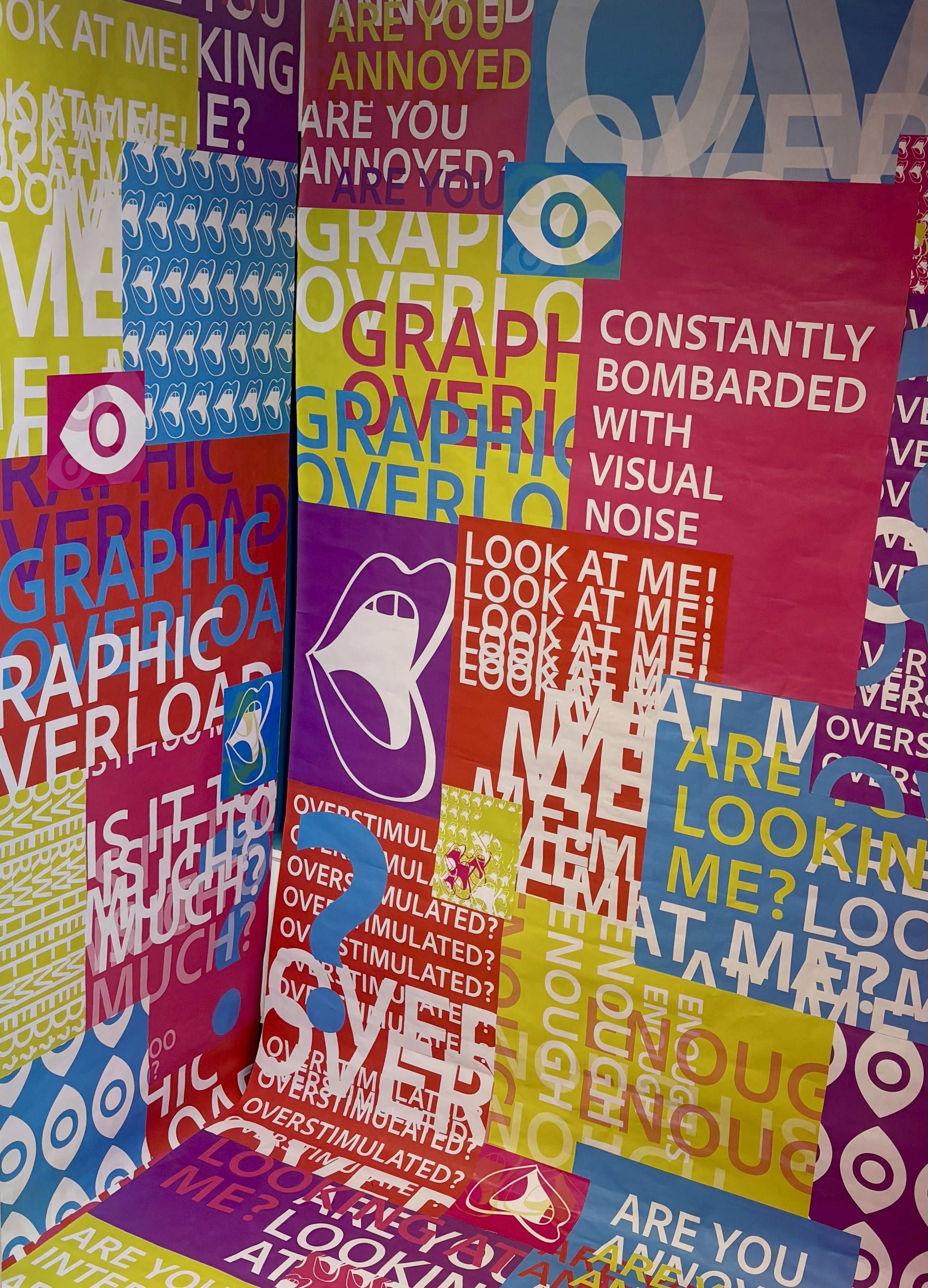
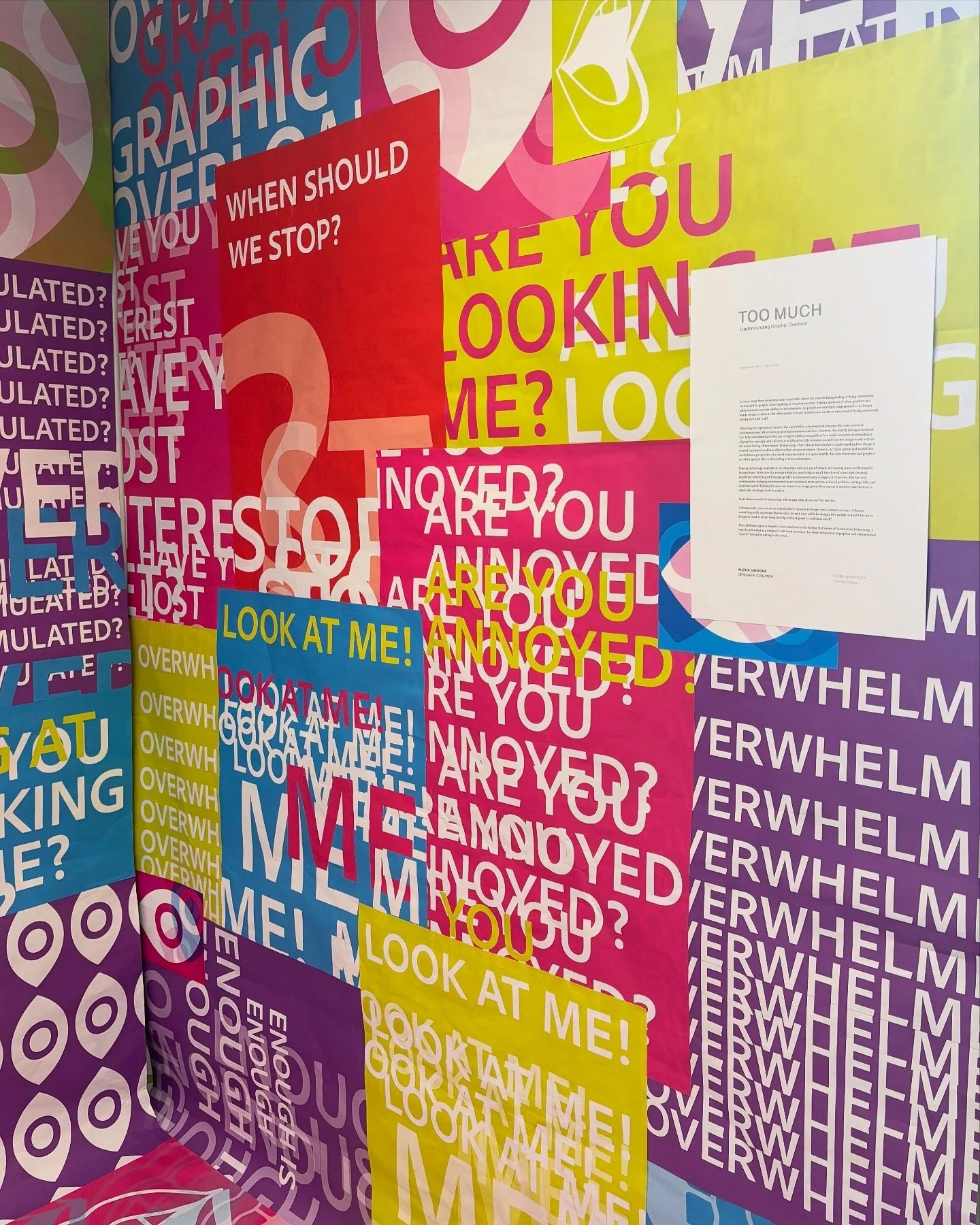
The study focuses on understanding graphic overload and the feeling of being consistently bombarded with visual noise resulting in exhaustion. Raises a question of when graphics and advertisements become ineffective to consumers. As people are we simply programmed to no longer watch, retain, or listen to information in front of us because we are so exhausted of being consistently bombarded with it all? The final dimensions span 6ft by 6ft by 9 ft and is created using printed poster.
-
![Exhibition image]()
OCAD U GradEx 110 Display
-
![Promotional Posters]()
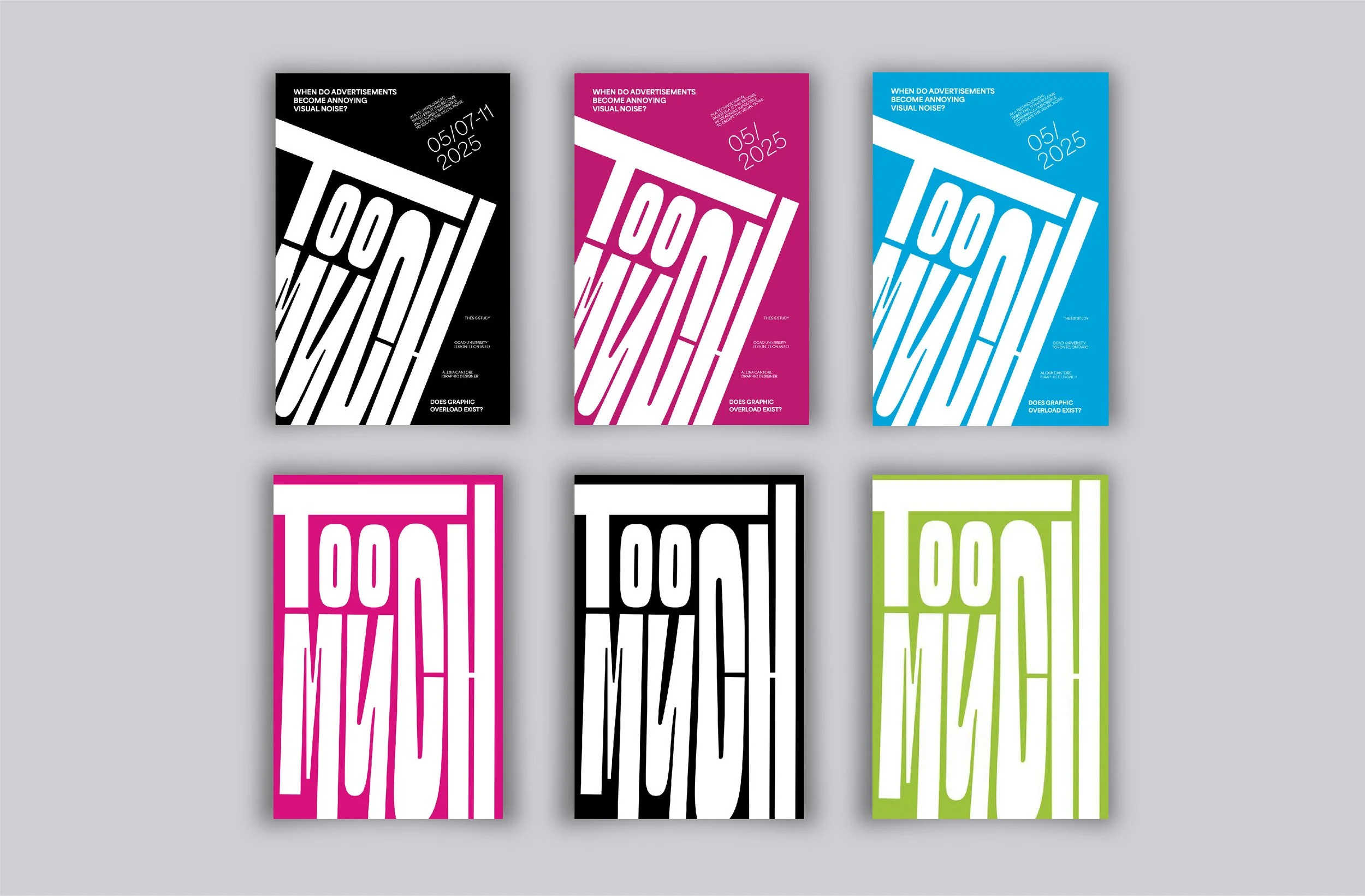
Promotional Exhibition Material
-
![]()
Exhibition photos
-
![]()
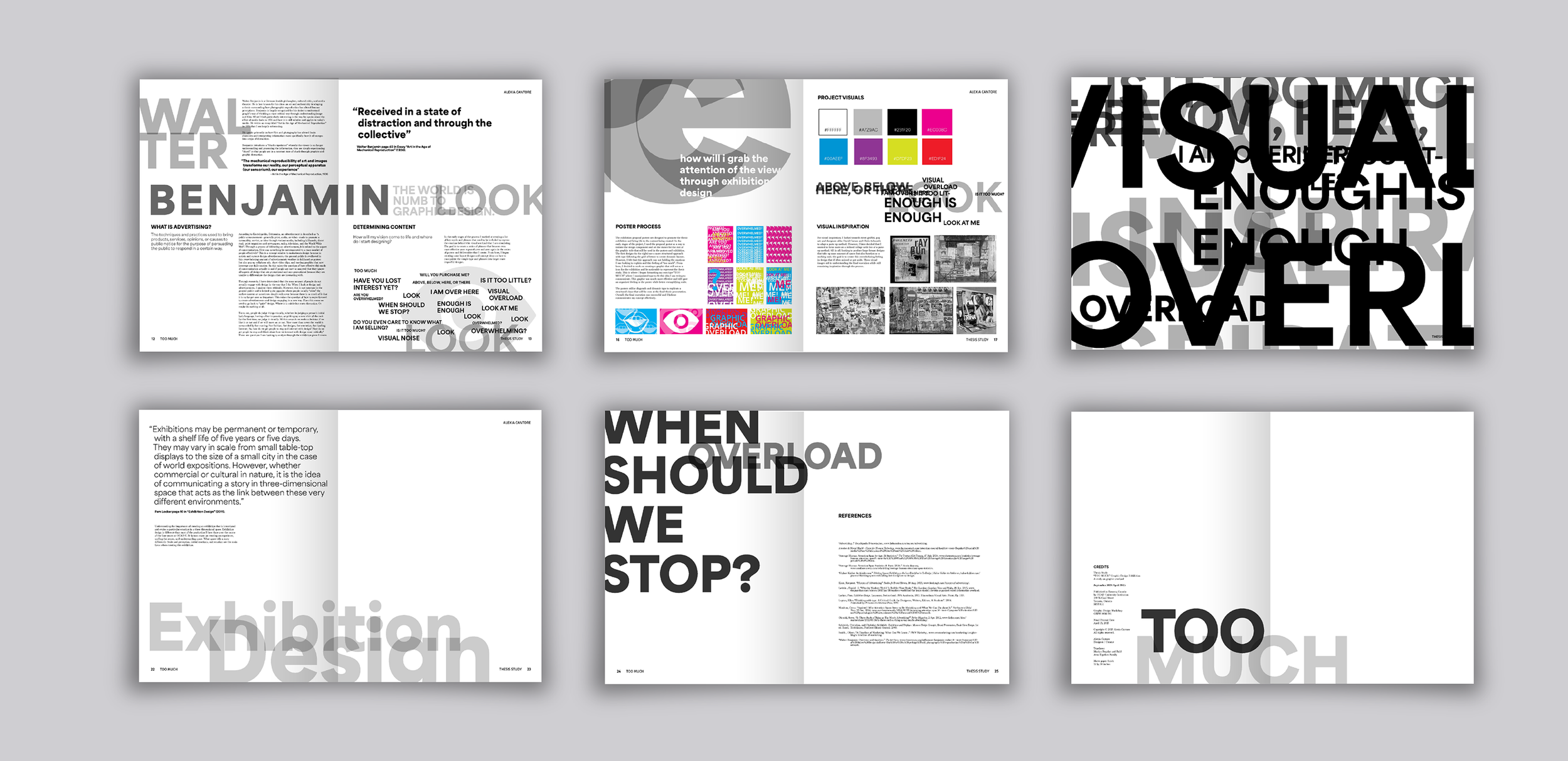
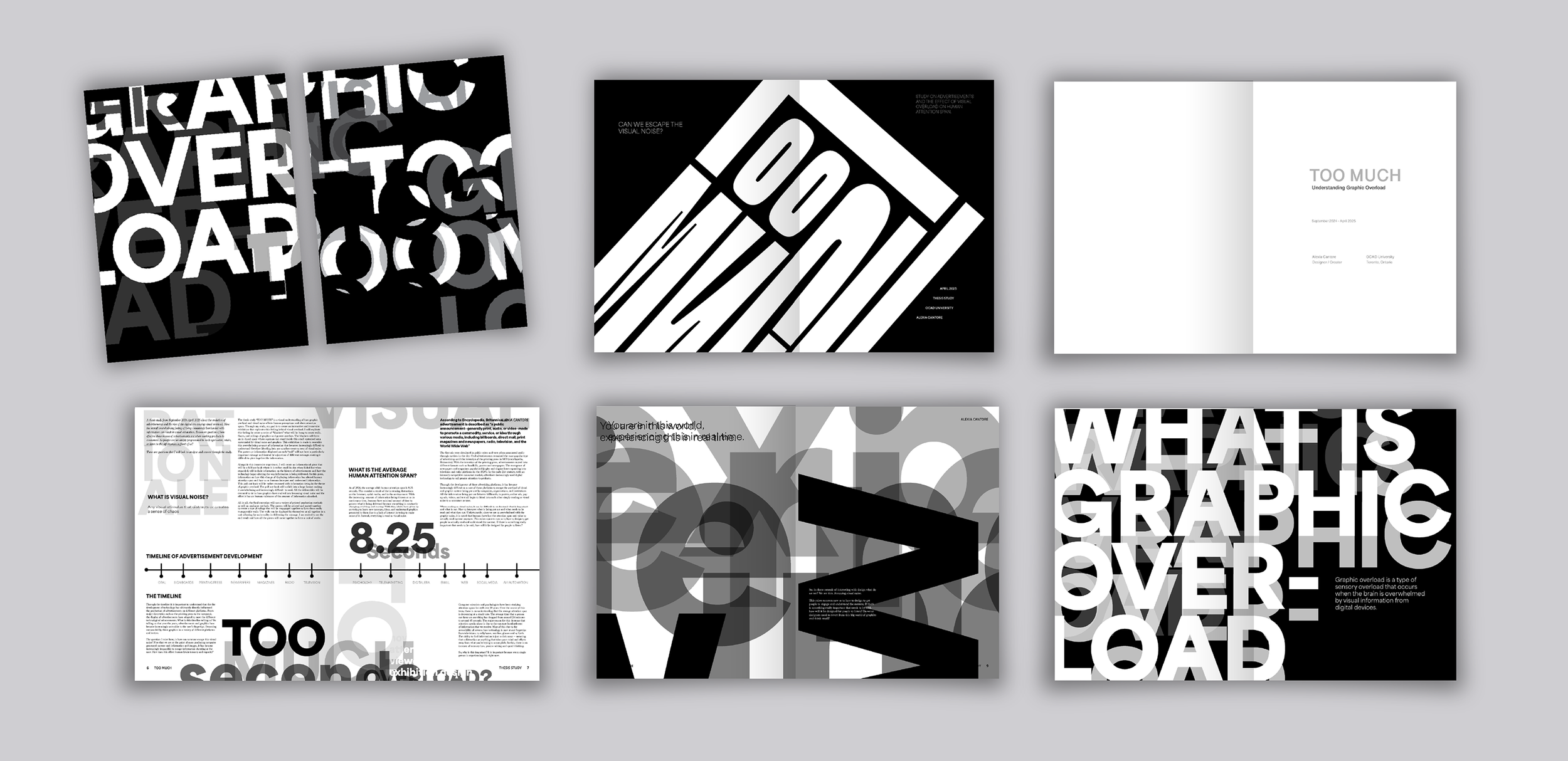
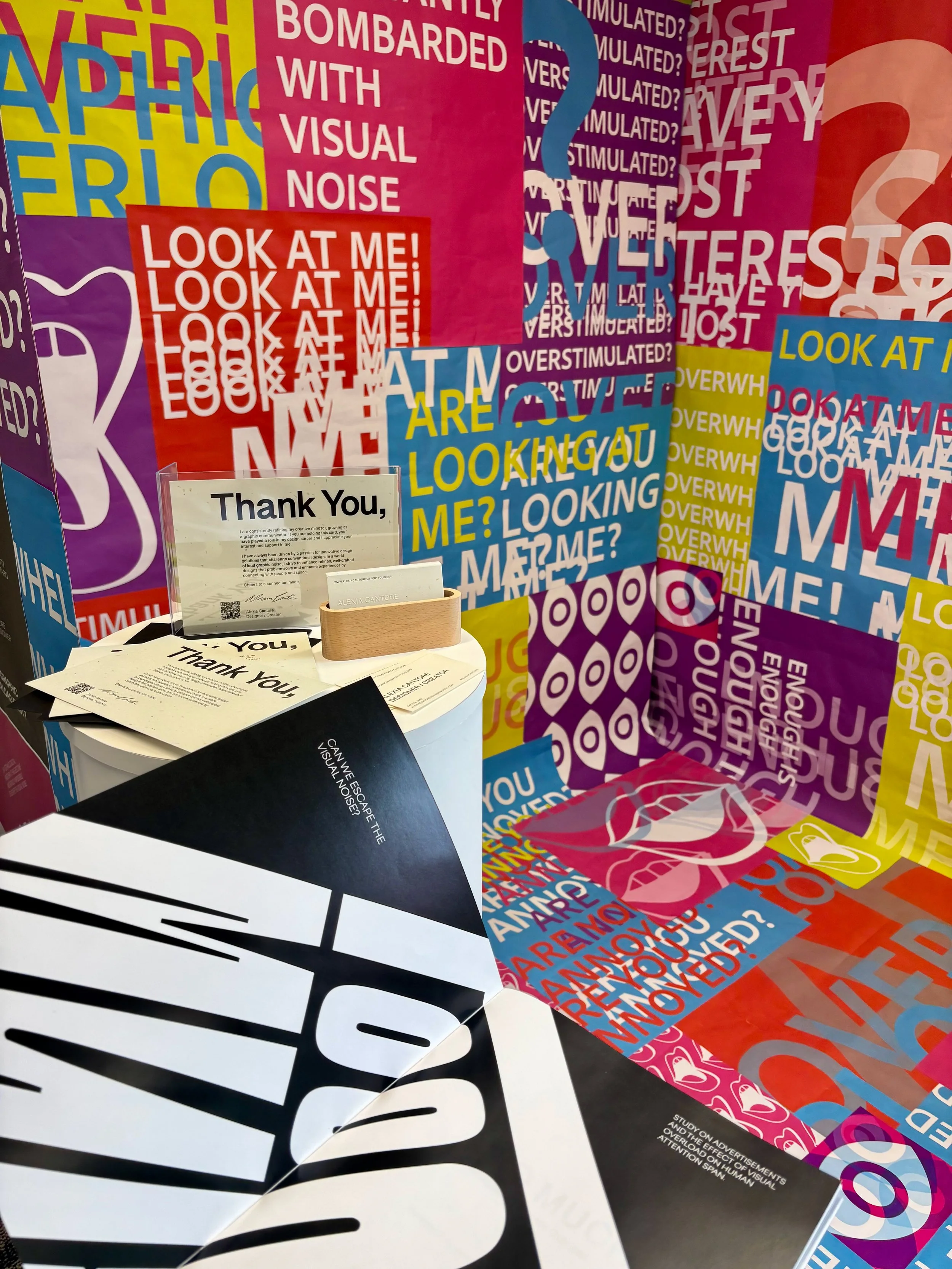
Informational Editorial Design
The Ideology
Following the explosion of print in the early 1920’s, advertisements became the main source of information and call-outs for promoting businesses/services. However, this overall feeling of overload isn’t fully maximized until the use of digital platforms expedited. In a world of endless bombardment of graphics, pop-ups, and call outs; it is difficult to fully immerse oneself into the design world without the initial feeling of annoyance. From young, I have always been drawn to understanding how design is created, marketed, and impacted.
However, as I have studied the world from a perspective of a communicator, it is quite notable that graphics are often ignored due to this feeling of visual exhaustion. With now the average attention span being at an all-time low of about eight seconds, people are interacting with design quickly and unconsciously disregard it. Overtime, this fast and continuously. Overtime, this fast and continuously changing environment causes increased memory loss, reduced problem-solving skills, and decreases speed thinking because our brain is no longer given the
exercises it needs to take the time to intuitively challenge itself to analyze. Overtime, this fast and continuously changing environment causes increased memory loss, reduced problem-solving skills, and decreases speed thinking because our brain is no longer given the exercises it needs to take the time to intuitively challenge itself to analyze.